Tuesday, 2 September 2014

Gravity Fields Science and Arts Festival

St Wulfstan's Church, Grantham


Businesses in Cambridgeshire and elsewhere in the region may wish to visit Grantham a few miles up the A1 for the Gravity Fields Science and Arts Festival between 24 and 28 September 2014. There is a wide range of events from rocket workshops for 2 to 5 year olds to lectures on quantum computing and other topics by the country's leading academics. For those who are more interested in the performing arts there will be an exciting new ballet Chasing the Eclipse by Chantry Dance Company in which Dominic North will dance with Rae Piper.

Our chambers contribution to the festival will be an IP workshop and clinic at Grantham College on 26 Sept at 14:00. Speakers will include Jane Lambert of 4-5 Gray's Inn Square, Gary Townley of the Intellectual Property Office and Keith Loven of Loven IP. More details of the event are available in Grantham Science Festival - there is a practical side to science 4-4 IP 1 Sep 2014.

After the event there will be opportunities for one to one consultations with one of the speakers.  An hour with a patent attorney or counsel can cost many hundreds of pounds so this is your opportunity to pick the brains of one of those specialists on any of the IP issues affecting your business for free.

Demand is likely to be heavy so advanced booking through Eventbrite is essential.  We look forward to meeting you.

Friday, 15 August 2014

Cambridge Innovation Capital's Initial Investments

Canbridge
Photo Wikipedia


Jane Lambert

Cambridge Innovation Capital describes itself as "an investment fund that invests in high-growth technology companies, led by an experienced investment team, an outstanding board and advisory panel of leading scientists and entrepreneurs." With managers and advisers drawn from academia and industry as well as finance the fund aims to invest £50 million in companies based in Cambridge over the next three years.

The fund announced its first three investments on 12 Aug 2014 (see "Cambridge Innovation Capital announces first three investments from its £50 million Cambridge Cluster fund" 12 Aug 2014).  They include:
  • £1.5 million in Cambridge Imaging Systems to develop "cloud-based and on-premise software that enables owners of video to archive, deliver and bill for content";
  • £1.25 million in Origami Energy to develop a platform for the intelligent active management of distributed energy assets; and
  • £100,000 in Jukedeck to develop software that enables to create their own music for use in video games, films and other applications.
I shall watch those companies and Cambridge Innovation Capital's other investments and report on their progress from time to time.

Monday, 11 August 2014

IP Events in Suffolk - Every Business Owns IP. What do you own?

Gainsborough's Mr and Mrs Andrews (1748–49)


Jane Lambert

Two interesting IP events are taking place in Suffolk over the Autumn. Both are called "Every Business Owns IP. What do you own?". The Intellectual Property Office is taking part in both events.

The first takes place in Bury St Edmonds on 7 Oct 2014 between 09:00 and 13:00 at Denny Bros, Kempson Way, Bury St Edmunds, IP32 7AR as part of the Bury St Edmunds Business Festival. You can find further information and make an on-line booking here.

The second is in Ipswich on 18 Nov 2014  between 09:00 and 13:00 at IP City Centre, 1 Bath Street, Ipswich, IP2 8SD and is organized by Menta Marketing. Dummett Copp are also taking part.  More information and booking details are available here.

Please note that if you book for the Ipswich event and fail to turn up the organizers will be after you for £30. But as they are laying on free food why wouldn't you come?

Tuesday, 29 July 2014

How to protect an innovative new service.

Jane Lambert


This is a question that I am often asked in IP clinics. The client describes his brainwave for a service that has some innovative features and asks: "Can I get a patent for that?" The answer is almost invariably "no" because patents are granted for inventions and most countries' patent laws including our own make clear that inventions are either products or processes. You can, of course, get a patent for an invention that is used to deliver a service but even then you have to be careful because art 52 (2) of the European Patent Convention excludes from the definition of "invention":
"(a) discoveries, scientific theories and mathematical methods;
(b) aesthetic creations;
(c) schemes, rules and methods for performing mental acts, playing games or doing business, and programs for computers
(d) presentations of information."
as such. The answer I usually give to the question is to rely on a cocktail of intellectual property rights for different aspects of the service.

Confidence
While making plans for your business it is best to keep your ideas to yourself. If you have to take someone into you confidence get him or her to sign a non-disclosure agreement first unless he or she is already bound by an obligation of confidence. It is sometimes possible to keep some technical and commercial information secret after the business is launched. The obligation of confidence is not an intellectual property right. It simply prevents a person to whom commercially sensitive information is disclosed in confidence ("the confidante") from passing that information on to others or using it for his or her own benefit. So long as the information can be kept secret the obligation can last indefinitely. Business and marketing plans, customer account and contact details, manuals and recipes are examples of information that can be protected in this way. It is important to note that the courts will enforce an obligation of confidence only if, and for so long as, the information remains secret. Thus, paper documents have to be kept under lock and key, computer records held in password protected files and staff have to be trained and motivated to keep their employer's confidential information secret.

Trade Marks
Since the reputation of the service provider is likely to be an important consideration for potential customers the service provider should register the sign under which his or her products are supplied as trade marks. Usually these will be the name and logo of the business but it may also be the sign under which a particular service is supplied. The sign must of course be distinctive and it should be registered for the goods or services that the service provider intends to supply over the next 5 years. It can be registered for the UK alone or for the European Union which includes the UK. When registering a trade mark it is important to remember to use the mark for it can be revoked for non-use, to look out for and challenge applications to register similar marks which can be done by registering with a watch service and to make provision for funding such challenges or enforcing the trade mark by taking out before-the-event insurance wherever possible. The small claims track of the Intellectual Property Enterprise Court ("IPEC") provides a low cost forum for infringement disputes while oppositions and applications for revocations and declarations of invalidity of British marks can be heard in the Intellectual Property Office.

Copyright
Manuals, diagrams, computer programs, videos, advertising, promotional and point of sale literature and other materials used in the delivery of a service are usually works in which copyright can subsist. Copyright prevents copying, publication, renting, lending, performance, communication and adaptation of such works but it does not prevent the use of the ideas expressed in those materials. Thus, it is unlawful to copy a business form but it is permissible to create a form that serves the same purpose in a competing business so long as the competitor does not copy or refer to the original form.  As he or she may well be challenged it is important for the competitor to keep an audit trail to prove that his or her form was created independently. There is no system of copyright registration in the UK though there is in the USA and some other countries. All that is required is that a qualified person (a British citizen or resident or citizen or resident of a country with which the UK has a reciprocal agreement which includes most countries) creates an original artistic, dramatic, literary or musical work, a film, sound recording or broadcast or a typographical arrangement of a published work. The work need not be new. It must simply be the product of the author's independent skill and labour. Again, provision must be made for funding infringement actions by insurance or otherwise. The small claims track of IPEC provides a forum for resolving copyright disputes.

Designs
Functional designs can be protected in the UK by an intellectual property right that is almost unique to this country known as "design right."  Ornamental designs can be protected by registration as registered designs under the Registered Designs Act 1949 or as registered Community designs under the Community design regulation. Designs that could be registered either as registered or registered Community designs can b protected from copying as unregistered Community designs,  Those intellectual property rights can cover much of the equipment used in the delivery of a service such as cutlery and crockery in catering, a hair dryer or sun bed in the beauty industry or the uniforms or overalls worn by employees in any industry. Design rights cannot be registered.  All that is required is the recording of the design either in a drawing or other document or the making of a prototype by a British national or resident, the national or resident of another EU member state or national or resident of another state with a reciprocal agreement with the UK. Also, the design must be original in the sense that it involves independent skill and labour and is not a copy of an antecedent work. Registered and registered Community designs must be new and have individual character. They may be registered for 5 renewable terms of 5 years each. The small claims track of IPEC can hear design right claims but not registered design or registered Community design cases.

Database Rights
Customer records, parts lists and other collections of data can be protected by database right. This is a right that prevents the unauthorized extraction and re-utilization of data held in databases and is quite separate from the design of a database that is protected by copyright.

Mixing the Cocktail
The first step is to analyse how the service is delivered and the assets that are used in such delivery. That is best done by an intellectual property audit that can be carried out by a specialist lawyer or patent or trade mark attorney. The next step is to consider the intellectual property rights that can be used to protect those assets. Sometimes there are choices to be made. For example, does the business owner apply for a patent which means that he or she must disclose his or her invention to the world or does he or she hope that he or she can keep it secret and rely on the law of confidence to prevent unauthorized use or disclosure? Those choices sometimes involve establishing priorities which usually depend in turn on the business owner's budget and other constraints. All this is part of an emerging discipline called intellectual property strategy which combines business and legal advice. It is a discipline in which I have a considerable personal as well as professional interest and I have contributed a number of articles to its small but growing literature.

Further Information
Should anybody want to discuss this article or any of he topics mentioned or referred to call me on 020 7404 5252 during normal business hours. You can also contact me through my contact form or message me through FacebookG+, Linkedin, twitter or Xing.

Sunday, 13 July 2014

The Intellectual Property Act 2014 - What it could mean to you

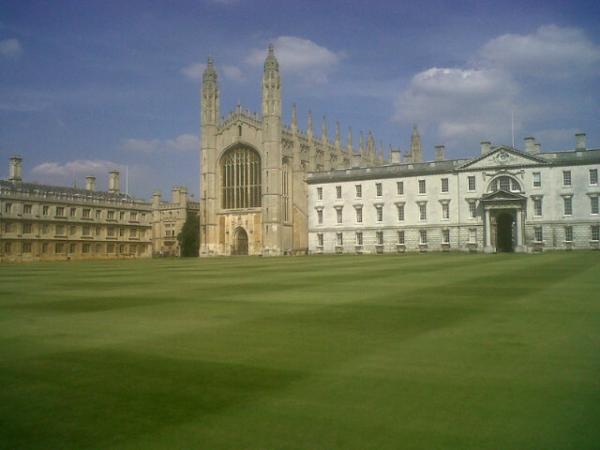
Cambridge from the Backs


Jane Lambert

The East of England with many of our greatest universities and some of our most innovative companies has a vital interest in the laws that protect new technologies and design. The Intellectual Property Act 2014 will make important changes to our laws on patents and registered and unregistered designs. I have written quite a few articles, given a presentation and analysed the effect on patents, registered designs and unregistered design right for specialist IP solicitors and patent and trade mark attorneys which you can find in the bibliography to "Reflections on the Intellectual Property Act 2014" 7 June 2014 IP Tech. This article is aimed at business owners - particularly the new and growing businesses in biotechnology, computing, e-commerce, medical devices - as to what the Act will mean for them.

The Unitary Patent
One of the biggest concerns for high technology businesses in this region has been the cost of patent prosecution and enforcement in the EU. One obvious answer to that concern would be an EU patent and the governments of the member states of the EEC actually reached agreement for a Community patent some 40 years ago. Unfortunately not enough member states ratified that agreement (known as the Community Patent Convention) to bring it into force because of disagreements over language and dispute resolution and the Convention never came into force. There was an attempt to revive the Convention in 1989 and the Commission later proposed a Community patent regulation but all those attempts foundered on the same issues that had scuppered the Convention.

On 17 Dec 2012 most of the member states of the EU agreed a regulation that would enable the European Patent Office to grant a European patent designating the territories of most of the EU member states including the UK as though they were a single country. Such a patent will be known as a "unitary patent" and it will reduce greatly the costs of obtaining Pan-European patent protection.

Shorty afterwards most of the same member states plus Italy agreed to establish a single patent court ("Unified Patent Court" or "UPC") for their territories consisting of a Court of First Instance which will be based in Paris, London and Munich and a Court of Appeal in Luxembourg. The UPC will have jurisdiction to determine infringement and validity disputes relating to all European patents throughout the territories of all the contracting parties. It will thus simplify and greatly reduce the cost of patent litigation for businesses in the UK. In 2003 a high level advisory committee on intellectual property found that the average cost of patent litigation in the UK was over £1 million in the Patents Court and between £150,000 and £250,000 in the Patents County Court compared to €50,000 in Germany and France and €10,000 to 40,000 in the Netherlands. As the UPC will have jurisdiction throughout most of Europe businesses from the East of England and the rest of UK will bear the same prosecution and enforcement costs as their continental competitors.

S.17 of the Intellectual Property Act 2014 enables the Secretary of State to make regulations to implement the UPC agreement and thus the unitary patent into English law and a draft statutory instrument has already been offered for consultation. I have discussed that consultation in "Unified Patent Court Consultation" 25 June 2014 NIPC Law.

Other Changes to Patent Law
The Act allows the Intellectual Property Office ("IPO") to share information about unpublished patent applications with foreign patent offices which should remove at least one of the causes of (or excuses fro) delay in multiple patent applications. It exempts information about ongoing research and development that is partially funded by public money or in which the government has an interest from freedom of information requests. It also allows the Secretary of State to make regulations extending the range of issues that can be referred to the IPO for an examiner's opinion.  These and other changes to patent law are analysed in my article "How the Intellectual Property Act 2014 changes British Patent Law" 21 June 2014.

The Hague Agreement
In relation to industrial designs probably the biggest benefit of the Act for British business will be s.8 which will enable the Secretary of State to make regulations to enable the UK to accede to the Hague Agreement. The Hague Agreement is a treaty that allows designers or their employers to apply simultaneously for registration of their designs in more than one country in the way that the Patent Co-operation Treaty does for patents and the Madrid Protocol does for trade marks. Not a lot of countries have joined Hague so far but the EU is now a party and other countries including the USA are considering accession.

Other Changes to Design Law
It will soon be possible to obtain the opinion of a IPO examiner on the validity of a registered design and whether it has been infringed just as it is for patents. Appeals from IPO hearing officers will no longer lie to the Registered Designs Appeal Tribunal but to an appointed person or the court as already happens in trade mark appeals. There will soon be a right of prior user to enable those who began to make products to a design before the registration of that design to continue to do so. This is a right that already exists in relation to registered Community designs and there is a corresponding right in relation to patents and trade marks.

Criminal Sanctions for Deliberately Copying a Registered Design
The most controversial provision of the Act is s.13 which creates a new offence of deliberately copying a registered or registered Community design in the course of a business. This was opposed by many intellectual property lawyers including me and also by much of British manufacturing industry who feared it was the thin end of a wedge that would lead eventually to criminal liability for patent infringement. Others in the design lobby tried to introduce a clause criminalizing unregistered design infringement.  In the end the government's original proposals with a few minor changes were passed.  This provision may or may not deter counterfeiting because the government does not expect more than 4 prosecutions a year but it is almost certain to lead to a lot more challenges to registered and registered Community designs and threats actions.

Unregistered Designs
The main change is that title to an unregistered design right will no longer vest automatically in the person who commissions a registered design. Design consultancies and their customers should therefore review their contracts and standard terms of business. The definition of design has been amended and it should soon be easier for non-European companies to obtain protection for their original designs so long as they do at least some business somewhere in the EU.

Further Information
Detailed analyses of the main changes to registered design and unregistered design rights law are contained in "How the Intellectual Property Act 2014 changes British Registered Design Law" 19 June 2014 and "How the Intellectual Property Act 2014 will change British Unregistered Design Right Law" 11 June 2014 respectively.  If anyone wants to discuss this article or any of the issues arising out of it he or she should call me on 020 7404 5252 or fill in my contact form.  Members of the public can also tweet me, write on my wall, or contact me through G+, Linkedin or Xing.

Tuesday, 6 May 2014

Business Sustainability and Intellectual Property - how to make the Most of a Useful Essex Initiative

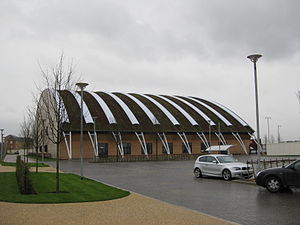
The Royal Opera House's Manoukian Production Facility Source Wikipedia


Jane Lambert

On the 6 Dec 2010 the Royal Opera House opened a workshop for making scenery and properties for its operas and ballets known as the Bob and Tamar Manoukian Production Workshop at the High House Production Park in Thurrock (see Warwick Thompson "Manoukian Foundation Helps Finance U.K. Royal Opera Facility" 21 Dec 2010 Bloomberg).  One of the features of that workshop is that it is designed to be as energy efficient and environmentally friendly as possible.

The Park has become a hub for the creative industries with the arrival of other businesses and institutions in the cultural sector. The Royal Opera House is now participating in a number of initiatives to assist small and medium enterprises in that sector in the East of England.  The latest initiative is Culture Change which is a business support programme for those businesses.  Supported by the European Regional Development Fund the project offers conferences and seminars on business sustainability, consultancy and individual business support and a peer to peer business support network.

The dates and particulars of those conferences, seminars and other events appear on the "Free workshops, webinars and networking events from Culture Change" page of the Royal Opera House website. Topics include funding, employment, environmental action planning and business sustainability supplied by the Royal Opera House itself and a number of partners including Julie's Bicycle which makes "environmental sustainability intrinsic to the business, art and ethics of music, theatre and the creative industries."

The first of the Culture Change events was the launch conference that took place at the Royal Opera House on 5 Feb 2014.  The House has published a YouTube video of the event, the agenda and speakers' biographies.  Although the agenda was very wide ranging there appears to have been no express consideration of the intellectual property issues that relate to sustainability which is surprising as intellectual property is vital to the creative industries.

One development that could be of enormous benefit to the businesses and institutions participating in Culture Change is the launch of WIPO Green a few months earlier by the World Intellectual Property Organization (the UN specialist agency for intellectual property). The purpose of WIPO Green and the way it works is explained in WIPO's YouTube video "WIPO GREEN - The Sustainable Technology Marketplace". This facility enables businesses to search for technologies which might address their needs that are ready for licensing and to offer any technologies that they may develop to those looking for such technologies around the world. WIPO Green is capable of magnifying the culture change initiative exponentially.

Those who  are not yet familiar with the basics of intellectual property law may wish to download my presentation "Introduction to Intellectual Property" and accompanying handout that I gave last year. The law will change shortly when the Intellectual Property Bill comes into force.  I am giving a talk "Learn how the IP Bill will affect you" on the 19 May 2014 at 16:00.  There is no charge for attending the talk but space is limited so you should book well in advance. You can reserve your place by calling George on 020 7404 5252 during office hours or registering on-line.

Post Script

There us already a direct link between WIPO Green and this region in that one of the partners in the scheme is Cambridge IP, an innovation and IP consultancy based in Cambridge as the corporate name suggests.

Monday, 21 April 2014

Why IP East?

Source Wikipedia


Jane Lambert

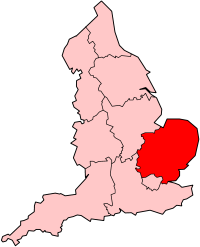
The East of England consists of the historic counties of Bedfordshire, Cambridgeshire, Hertfordshire, Essex, Norfolk and Suffolk which covers an area of 19,120 square kilometres and had a population of over 5.8 million in 2011. The reason why this region is important to us is that it hosts one of the highest concentrations of research based businesses in the country which are clustered around its universities in Cambridge, Colchester, Norwich and elsewhere. The region is also a centre of creativity with the Royal Opera House's Tamar Manoukian Production Workshop in Thurrock and the Norwich University of the Arts.

It is therefore unsurprising that businesses and individuals in the East of England filed 1,821 patent applications in 2011 (exceeded only by South East England and London and well ahead of Scotland, Wales and Northern Ireland with 931, 519 and 251 according to the IPO's Facts and Figures 2011 and 2012 Calendar Years).  The East of England was also fourth in the number of trade mark and fifth in the number of registered design applications.

Our chambers want to help those businesses protect and exploit their investment in brands, design, technology and works of art and literature in any way we can. Many of us were born, live or were educated in the region and all of us have some connection with, or interest in, the East of England.  Members of our IP and Technology Group believe that we can help with hood independent advice on IP strategy, that is to say identifying the optimum legal protection for a business's income stream whether that be by patents, registered or registered designs, trade secrets or otherwise. Our colleagues in Atlas Tax Chambers can do the same with tax. We can advise businesses or their professional intermediaries in the region on any difficult issue of IP law that may arise. We can draft complex legal instruments and as a last result provide representation in the IPO, Intellectual Property Enterprise and Patents Courts, before arbitrators or mediators or other tribunals and dispute resolution proceedings.

We shall do this in collaboration with other professionals, businesses and universities in the region. We shall help them set up and run workshops, seminars, clinics, inventors' and entrepreneurs' clubs in the East of England and support those that already exist as and where we can.  We have done similar work in the North of England for the last 10 years and are now doing the same in London and the South East.  If you want to participate iu any of those initiatives, please call me on 01603 343030 during office hours or use my contact form at any time.