Showing posts with label Thurrock. Show all posts

Tuesday, 26 July 2016

IP and Brexit: The Arts


Jane Lambert

This is the latest in my series of articles on IP and Brexit.  I set out the general position in What Sort of IP Framework do we need after Brexit and what are we likely to get?  3 July 2016 NIPC Law. As the effect of Brexit is likely to vary considerably from industry to industry I have considered the position of each economic sector.  So far I have covered fashion, software and private inventors.

In this article I consider the effect on the arts. I have published it in IP East because few regions have benefited more from investment in the arts than this one as I have mentioned more than once in this blog (see Why IP East 21 April 2014, Business Sustainability and Intellectual Property - how to make the Most of a Useful Essex Initiative 6 May 2014 and National College for the Creative and Cultural Industries 7 Dec 2014).  Thurrock, the district that has attracted much of that investment, was incidentally one of the local authorities that voted most heavily for Brexit: 79,916 people representing 72.72% of the electorate voted to leave the EU which was way above the national average (see EU referendum: full results and analysis The Guardian).

The arts will be one of the sectors least affected by changes in the low resulting from our withdrawal from the EU. Its work consists of literary and artistic works which fall into two categories:

  • Works in permanent form such as broadcasts, drawings, films, musical scores, novels, paintings, plays, poems, sculptures and sound recordings; and
  • Performances by actors, dancers, musicians, singers and others.
investment in creating, publishing and marketing works in permanent form is protected by copyright. Investment in performances is protected by a new intellectual property right known as rights in performances that came into being with the enactment of the Copyright, Designs and Patents Act 1988. Our law of copyright is codified by Part I of that Act and our law on rights in performances by Part II.

Now unlike designs, trade marks, plant varieties and to a lesser extent patents there has been no attempt to create an EU or Community copyright law. There have been a lot of EU directives that have been implemented by secondary legislation (see the Related Laws section on the Copyright Acts and related laws web page on the Gov.UK website) but many of these have been adopted to give effect to the EU member states' obligations under multilateral treaties to which HM government would probably have adhered whether the UK remained in the EU or not. Occasionally there have been disputes in several of the member states including Britain over the construction of those directives that have required a reference to the Court of Justice of the European Union but these have been far less common in copyright than in say trade marks.

After Brexit the directives will cease to bind the UK but the legislation that implements those directives will remain in force as it was made by or under an Act of Parliament. The one big change is that points of law arising from such legislation will cease to be referred to the Court of Justice. However, decisions of the Court of Justice on the interpretation of the directives are likely to have persuasive authority after we leave the EU. In her speech to the British group of the Union of European Practitioners in Intellectual Property on National and International-level concerns and developments regarding the IP landscape 30 June 2016 the Minister for IP promised that the UK would continue to lead in international IP discussions. One consequence of that is that we shall have to continue to implement changes in the multilateral IP treaties and when doing so it will be sensible to pay heed to what is happening in the rest of Europe.

There will be some sections of the arts that will be affected more by the disappearance of European trade marks and designs than others. The film industry, for example, depends heavily on brands but dance hardly at all (see my article Ballet as a Brand? How to bring More Money into Dance for Companies and Dancers 13 March 2014 Terpsichore). There will be some effect on merchandising and I have discussed these in IP and Brexit: the Fashion Industry (10 July 2016 4-5 IP).  

I shall discuss this topic as well as other IP issues arising out of Brexit at a seminar in Liverpool to be organized by Guy Williams Layton on 14 Sept 2016 and in London at 4-5 Gray's Inn Square on 15 Sept 2016. Both seminars are likely to be very popular and places will go very quickly. If you want to attend call me during office hours on 020 7404 5252 or send me a message through my contact form.

Tuesday, 6 May 2014

Business Sustainability and Intellectual Property - how to make the Most of a Useful Essex Initiative

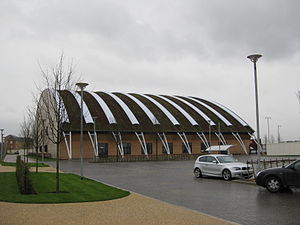
The Royal Opera House's Manoukian Production Facility Source Wikipedia


Jane Lambert

On the 6 Dec 2010 the Royal Opera House opened a workshop for making scenery and properties for its operas and ballets known as the Bob and Tamar Manoukian Production Workshop at the High House Production Park in Thurrock (see Warwick Thompson "Manoukian Foundation Helps Finance U.K. Royal Opera Facility" 21 Dec 2010 Bloomberg).  One of the features of that workshop is that it is designed to be as energy efficient and environmentally friendly as possible.

The Park has become a hub for the creative industries with the arrival of other businesses and institutions in the cultural sector. The Royal Opera House is now participating in a number of initiatives to assist small and medium enterprises in that sector in the East of England.  The latest initiative is Culture Change which is a business support programme for those businesses.  Supported by the European Regional Development Fund the project offers conferences and seminars on business sustainability, consultancy and individual business support and a peer to peer business support network.

The dates and particulars of those conferences, seminars and other events appear on the "Free workshops, webinars and networking events from Culture Change" page of the Royal Opera House website. Topics include funding, employment, environmental action planning and business sustainability supplied by the Royal Opera House itself and a number of partners including Julie's Bicycle which makes "environmental sustainability intrinsic to the business, art and ethics of music, theatre and the creative industries."

The first of the Culture Change events was the launch conference that took place at the Royal Opera House on 5 Feb 2014.  The House has published a YouTube video of the event, the agenda and speakers' biographies.  Although the agenda was very wide ranging there appears to have been no express consideration of the intellectual property issues that relate to sustainability which is surprising as intellectual property is vital to the creative industries.

One development that could be of enormous benefit to the businesses and institutions participating in Culture Change is the launch of WIPO Green a few months earlier by the World Intellectual Property Organization (the UN specialist agency for intellectual property). The purpose of WIPO Green and the way it works is explained in WIPO's YouTube video "WIPO GREEN - The Sustainable Technology Marketplace". This facility enables businesses to search for technologies which might address their needs that are ready for licensing and to offer any technologies that they may develop to those looking for such technologies around the world. WIPO Green is capable of magnifying the culture change initiative exponentially.

Those who  are not yet familiar with the basics of intellectual property law may wish to download my presentation "Introduction to Intellectual Property" and accompanying handout that I gave last year. The law will change shortly when the Intellectual Property Bill comes into force.  I am giving a talk "Learn how the IP Bill will affect you" on the 19 May 2014 at 16:00.  There is no charge for attending the talk but space is limited so you should book well in advance. You can reserve your place by calling George on 020 7404 5252 during office hours or registering on-line.

Post Script

There us already a direct link between WIPO Green and this region in that one of the partners in the scheme is Cambridge IP, an innovation and IP consultancy based in Cambridge as the corporate name suggests.