Showing posts with label Cambridge. Show all posts

Tuesday, 21 November 2017

Partnering for Prosperity: A new deal for the Cambridge- Milton Keynes-Oxford Arc


The National Infrastructure Commission is an executive agency of the Treasury. It consists of a chair, a deputy chair and 9 commissioners. It offers impartial, expert advice and recommendations to the government on economic infrastructure which includes energy, transport, water (drainage sewerage and flood management) and digital communications. Its objectives are to support sustainable economic growth across all regions of the UK and improve competitiveness and the quality of life,

In March 2016 the Commission was asked to consider how to maximize the potential of a corridor running between Cambridge and Oxford via Milton Keynes "as a single, knowledge-intensive cluster that competes on a global stage, protecting the area’s high-quality environment, and securing the homes and jobs that the area needs." It delivered an interim report in November 2016 which identified lack of adequate and affordable housing as a major impediment to growth and recommended investment in new housing, job creation and better transport.

In its final report, Partnering for Prosperity: A new deal for the Cambridge- Milton Keynes-Oxford Arcwhich was published on 17 Nov 2017, the Commission urged the government to make the corridor a national priority. It proposed new road and rail links between the towns and cities in the arc and massive house building and job creation including new town development on a scale last seen in the 1950s and 1960s.

The report highlighted some of the area's strengths:
  • Cambridge generates 19 times more patents than the national average;
  • productivity in Milton Keynes is 25% more than the national average;
  • Northampton has more business startups per 10,000 inhabitants than any other city except London; and
  • Oxford is a leading hub for bioscience, medical tech and physical sciences.
Better road and rail links and new housing are essential to maintaining and building on those strengths.

Anyone wishing to discuss the legal implications of these proposals should call me on 020 7404 5252 during office hours or send me a message through my contact form.

Sunday, 12 November 2017

East of England Science and Innovation Audit

Author TUBS
Licence: Creative Commons Attribution-share Alike 3.0 unported
Wikipedia Commons


Jane Lambert

Science and innovation audits map the research and innovation strengths and infrastructure of specific districts. They were announced by Jo Johnson MP when he was Minister of State for Universities and Science in a speech to the Advanced Manufacturing Research Centre of the University of Sheffield entitled One Nation Science on 16 July 2015. They are intended to "provide an evidence base for decision making on local innovation priorities, help strengthen future bids for local investment, and foster collaboration between universities, local businesses and other regional organisations."

One of the areas in which such an audit has been carried out is the East of England. A consortium consisting of representatives of the advanced manufacturing and materials, agri-tech, information and communications and life science industries and several of the region's local enterprise partnerships published the East of England Science and Innovation Audit on 25 Sept 2017. The audit was conducted between January and May of this year and engaged well over 200 stakeholders. It relied on both primary and secondary evidence and data and adhered to central government guidance.

The audit revealed great strengths in the region in each of the above-mentioned industries but it also exposed gaps in investment, skills, co-location and connectivity. The audit made a number of recommendations to address them:
  • Building innovative capacity, particularly among SMEs throughout the East of England;  
  • encouraging technology transfer, particularly for SMEs outside the main clusters in the East; 
  • Smart enabling technologies testbed: an infrastructure project to achieve high speed and high capacity connectivity throughout the region; 
  • Centre for AgriFood automation at Holbeach; 
  • A project to accelerate the development of emerging med-tech hubs and to build synergies;
  • Precision medicine cancer ecosystem; and
  • A cell and gene therapy R&D centre at Stevenage.
Each of those initiatives will need specialist legal advice. They will require contracts and other legal instruments. Any new products or processes that may be developed will require legal protection. I can help with all of that. I can assist in contract negotiations and drafting, advise on the optimum protection for the new technologies, review and draw up licences and, if necessary, help resolve any disputes or other difficulties that may arise. I can be consulted by business leaders, investors, academics or others directly or through patent and trade mark attorneys or law firms. 

Should anybody wish to discuss this article or innovation generally, he or she may call me on 020 7404 5252 during office hours or send me a message through my contact page.

Friday, 2 September 2016

An Example of how Patenting can work

Electron Micrograph of the Zika Virus
Author Cynthia Goldsmith, Centre for Disease Control and Prevention
Licensed by US government
Source Wikipedia 


Jane Lambert

In Patent or No Patent 28 Aug 2016 NIPC Inventors Club I warned of the risks and costs of patenting, discussed alternatives to patents and suggested a simple methodology by which companies could identify the type of legal protection for their intellectual assets (intellectual property) would be right for their businesses. There are, however, circumstances when only a patent will do and although those are much more likely to arise in the case of big companies there are still instances when a patent can assist a small one or even an individual inventor with a bright idea.

I was slowly coming to at 06:15 this morning when I heard an interview on BBC Radio 4's Today programme with an entrepreneur called Peter Laing who claimed to have developed a new response not just to the zika virus but also to dengue fever as well. Laing was asked how the technology was developed and he replied largely in his head. He added that he had a patent for the basic idea. He also talked about his company's business strategy which was to license the technology to multinationals like GSK and Xanofi with the manufacturing capacity and distribution channels to market a vaccine for zika and dengue.

That interview got me out of bed with a start and I started googling. I discovered an article by Andrew McConaghie in Phamaphorum entitled Single vaccine against Zika and Dengue to be developed 18 Aug 2016 which seemed broadly consistent with the item on Today.  That led me in turn to the website of a company at the St John's Innovation Centre in Cambridge called Excivion Ltd. and to one Peter Laing its CEO. I also made an Espacenet search against Peter Laing and found several entries where he was named as an inventor.

Now this is not an endorsement of Dr Laing or Excivion Ltd. I have no more inkling than anyone else whether this business strategy or technology will succeed. This article is not to be read as an investment tip or even a work of journalism. I am a patent lawyer and not an investment analyst or a journalist. My point is simply that patenting can work for very new and fairly small companies including start-ups even in advanced technologies and this could be an example.

It is important to note that Dr Laing has an exceptionally strong academic record having read biochemistry and carried out research at the University of Bath and after holding postdoctoral appointments in New Zealand, Bristol and the USA and teaching at the University of Nottingham. He has also had a very impressive business career holding senior appointments in research and development and setting up a successful consultancy. Not every private inventor has those sort of credentials.

It also appears from the home, about, intellectual property, news and media and consultancy pages of its website that Excivion has integrated its IP strategy into its business plan as I suggested in Why every business plan should take account of intellectual property 3 April 2016 NIPC News.  That is another important ingredient of success.

I urge any readers who are thinking of going into business to exploit a new technology to follow this company (as it will) to see what can be learned from its success or failures. Naturally I hope it will be very successful and I wish Dr Laing and his colleagues well with their venture But if for any reason it does not work there will be lessons to be learned that could be even more important than a success story.

Wednesday, 4 May 2016

Plant Breeders' Rights

Wheat
Author User Bluermoose
Source Wikipedia
Creative Commons Licence


Jane Lambert


As the world comes to terms with a changing climate and a rapidly increasing population the development of new drought, disease and pest resistant and higher yielding crops is vital.  The development of a new plant variety requires considerable investment which is protected in the UK by the Plant Varieties Act 1997. This Act establishes intellectual property rights known as "plant breeders' rights" that may subsist in varieties of plant genera and species. Holders of those rights are entitled
"to prevent anyone doing any of the following acts as respects the propagating material of the protected variety without his authority, namely—
(a) production or reproduction (multiplication),
(b) conditioning for the purpose of propagation,
(c) offering for sale,
(d) selling or other marketing,
(e) exporting,
(f) importing,
(g) stocking for any of the purposes mentioned in paragraphs (a) to (f) above, and
(h) any other act prescribed for the purposes of this provision."
Anyone who does any of those acts in relation to a protected variety without the holder's licence may be sued in the Patents Court or Intellectual Property Enterprise Court for an injunction, damages or other relief.

The body responsible for granting those rights is the Plant Variety Rights Office which is located in Cambridge:
Plant Variety Rights Office
Animal and Plant Health Agency
Eastbrook
Shaftesbury Road
Cambridge
CB2 8DR
Tel: +44 (0) 208 026 5993
Fax: +44 (0) 208 415 2504
Email: pvs.helpdesk@apha.gsi.gov.uk
In order to qualify for such rights a variety must be:
  • distinct (that is to say it must have different characteristics to other plants of the same species);
  • uniform (all plants of the variety must share the same characteristics); and
  • stable (it must remain unchanged after ‘repeated propagation’, whether from seeds, cuttings, bulbs or other plant parts).
If those rights are granted they subsist for 30 years from the date of grant in the case of potatoes, trees and vines or 25 years in the case of anything else.

New plant varieties may also be protected throughout the EU by Community plant variety rights which are granted by the Community Plant Variety Office under the Council Regulation (EC) 2100/94 of 27 July 1994 on Community plant variety rights (OJ  L 227 , 01/09/1994 P.1-30) but national plant breeders' rights may not be enjoyed concurrently with Community plant variety rights,

Both the United Kingdom and the European Union are party to the International Convention for the Protection of New Varieties of Plants which facilitates reciprocal protection of new plant varieties. The Convention established the UPOV (International Union for the Protection of New Varieties of Plants) which implements the Convention.

Because the Cambridge Centre for Crop Science, the National Institute for Agricultural Botany (NIAB), the Plant Variety Rights Office and one of the world's leading research universities in agronomy and agriculture are located in Cambridge these important but little studied intellectual property rights are of particular importance to this region. More basic information is provided in Get plant breeders’ rights to your new variety on the British government website. Somewhat more detailed information is set out in the Plant Breeders' Rights Handbook. Anyone wishing to learn more about plant breeders rights should call me on 020 7404 5252 during office hours or send me a message through my contact form.

Friday, 15 August 2014

Cambridge Innovation Capital's Initial Investments

Canbridge
Photo Wikipedia


Jane Lambert

Cambridge Innovation Capital describes itself as "an investment fund that invests in high-growth technology companies, led by an experienced investment team, an outstanding board and advisory panel of leading scientists and entrepreneurs." With managers and advisers drawn from academia and industry as well as finance the fund aims to invest £50 million in companies based in Cambridge over the next three years.

The fund announced its first three investments on 12 Aug 2014 (see "Cambridge Innovation Capital announces first three investments from its £50 million Cambridge Cluster fund" 12 Aug 2014).  They include:
  • £1.5 million in Cambridge Imaging Systems to develop "cloud-based and on-premise software that enables owners of video to archive, deliver and bill for content";
  • £1.25 million in Origami Energy to develop a platform for the intelligent active management of distributed energy assets; and
  • £100,000 in Jukedeck to develop software that enables to create their own music for use in video games, films and other applications.
I shall watch those companies and Cambridge Innovation Capital's other investments and report on their progress from time to time.

Monday, 21 April 2014

Why IP East?

Source Wikipedia


Jane Lambert

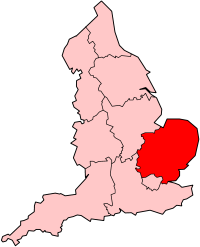
The East of England consists of the historic counties of Bedfordshire, Cambridgeshire, Hertfordshire, Essex, Norfolk and Suffolk which covers an area of 19,120 square kilometres and had a population of over 5.8 million in 2011. The reason why this region is important to us is that it hosts one of the highest concentrations of research based businesses in the country which are clustered around its universities in Cambridge, Colchester, Norwich and elsewhere. The region is also a centre of creativity with the Royal Opera House's Tamar Manoukian Production Workshop in Thurrock and the Norwich University of the Arts.

It is therefore unsurprising that businesses and individuals in the East of England filed 1,821 patent applications in 2011 (exceeded only by South East England and London and well ahead of Scotland, Wales and Northern Ireland with 931, 519 and 251 according to the IPO's Facts and Figures 2011 and 2012 Calendar Years).  The East of England was also fourth in the number of trade mark and fifth in the number of registered design applications.

Our chambers want to help those businesses protect and exploit their investment in brands, design, technology and works of art and literature in any way we can. Many of us were born, live or were educated in the region and all of us have some connection with, or interest in, the East of England.  Members of our IP and Technology Group believe that we can help with hood independent advice on IP strategy, that is to say identifying the optimum legal protection for a business's income stream whether that be by patents, registered or registered designs, trade secrets or otherwise. Our colleagues in Atlas Tax Chambers can do the same with tax. We can advise businesses or their professional intermediaries in the region on any difficult issue of IP law that may arise. We can draft complex legal instruments and as a last result provide representation in the IPO, Intellectual Property Enterprise and Patents Courts, before arbitrators or mediators or other tribunals and dispute resolution proceedings.

We shall do this in collaboration with other professionals, businesses and universities in the region. We shall help them set up and run workshops, seminars, clinics, inventors' and entrepreneurs' clubs in the East of England and support those that already exist as and where we can.  We have done similar work in the North of England for the last 10 years and are now doing the same in London and the South East.  If you want to participate iu any of those initiatives, please call me on 01603 343030 during office hours or use my contact form at any time.